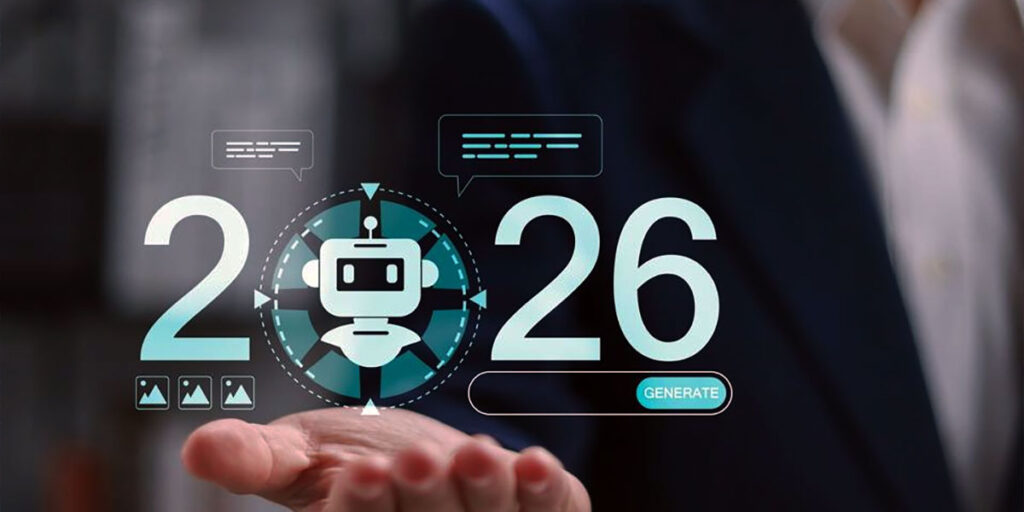
By 2026, digital culture will undergo a shift that many researchers compare to the emergence of social media in the early 2010s. While the internet was once a space where people shared hand-crafted content, it is now increasingly a collaborative effort between humans and algorithms. Generative neural networks create images, music, videos, and even entire virtual personalities.
According to creative technology market analysts, more than 35–40% of digital visual content in commercial projects is already being created using AI tools. In the gaming industry, this figure can exceed 50%, especially during prototyping of environments and NPC characters. Moreover, a significant shift is occurring not only in content production but also in social dynamics: communities are forming around AI tools, where users exchange prompts, models, and styles.
Why AI has become a mainstream creative tool
The main reason is the lowering barrier to entry. While creating high-quality 3D graphics previously required years of training, today, a basic level can be achieved in a few months. As a result, a new economy of micro-creators is emerging.
For example, on digital asset marketplaces, the number of independent creators has grown by approximately 60% over the past three years. Meanwhile, the average content production cycle has been cut almost in half. New digital communities are built around three key factors:
- access to generation tools
- sharing styles and trained models
- collaborative creation of digital worlds
This model is reminiscent of early software developer forums, only now the object of collaboration is culture, not just code. Synthetic culture is not simply «artificial» content. It is a new form of collective creativity. For example, in 2024–2025, online communities emerged where users collaborate to train models for specific aesthetic trends—from retrofuturism to hyperrealistic documentary stylisation.
Interestingly, such communities often operate on an open-source basis: participants share datasets, styles, and generation settings. This accelerates the development of new cultural trends many times faster than in the era of traditional media.
AI in Hospitality and Cultural Branding
AI is expanding far beyond digital communities and creative platforms. In hospitality, it can support better customer interaction, smoother operations, and a stronger digital presence.
A concept like Kytaly.ch reflects this shift well. By combining Italian culinary tradition in Geneva with a clear cultural identity, this approach shows how AI could help restaurants refine the guest experience while presenting their atmosphere, values, and brand story more effectively online.
From Digital Personalities to Collective AI Creativity
The next stage of development is the emergence of stable digital identities. Virtual influencers already exist today, managing social media, collaborating with brands, and participating in marketing campaigns. According to estimates from the virtual character market, their advertising effectiveness sometimes exceeds that of real influencers due to their complete control and the absence of reputational risks.
But another trend is even more interesting: collective AI characters. This is when a virtual personality is created not by a single creator, but by an entire community. Such a character can evolve along with the group’s culture. In the next 5-7 years, experts expect the emergence of:
- fully synthetic digital communities
- AI-generated cultural movements
- collective virtual brands
- adaptive virtual worlds that change to suit their audience
At the same time, the technology of personalised digital spaces is developing. Imagine a platform where the interface, visual style, and even interaction scenarios are tailored to the specific user.
Bottom Line
The main reason for this trend’s sustainability is economic. Generative technologies dramatically reduce the cost of content creation. Where a team of 20 people was previously required, five specialists and AI tools are now sufficient.
The second reason is social. People want not only to consume content but also to participate in its creation. Generative tools make this possible. The third reason is technological. Models are becoming faster, cheaper, and more accessible every year. While generating a complex scene took minutes in 2022, today it takes seconds.
Synthetic culture is more than just a stage in the internet’s development. It’s a fundamental change in how digital content is created, distributed, and consumed. Generative technologies, behavioural analytics, and interface personalisation are already shaping a new ecosystem of digital communities. And as AI develops further, digital culture becomes increasingly a collaborative product of humans and algorithms.