
While in the early 2010s, recommendation algorithms seemed like a supporting tool—»show similar products» or «suggest similar videos»—by 2026, they had evolved into a fully-fledged infrastructure of digital reality. Today, recommendations determine not only what people watch, but also what they consider the norm, trends, mass opinion, and even part of their own identity.
According to industry reports from streaming platforms, up to 70–80% of content views today are driven by recommendation systems rather than manual searches. The situation is similar in e-commerce: more than 35% of purchases are influenced by personalised recommendations. But the key shift has been that algorithms have ceased to be mere «filters.» They have become active participants in shaping the digital experience. When a user opens an app, they don’t see a neutral feed—they see a digital reality tailored to their behavioural profile.
From Simple Patterns to Behavioural Models
Early algorithms worked simply: if users A and B watched the same movies, they could be recommended similar content. Today, systems build complex behavioural models. They analyse not only clicks but also:
- scroll speed
- attention span
- repeat viewings
- micropause before interaction
- time of day and device
For example, if a user lingers on a video for 2-3 seconds longer than usual, the system can interpret this as a sign of potential interest. At the scale of millions of users, such signals form powerful behavioural predictions.
Large platforms like Instagram and TikTok are now using hybrid models—a combination of neural networks, behavioural statistics, and contextual analysis. In some cases, recommendation models are updated every few minutes, especially in environments with high competition for user attention. Within the industry, there’s talk of a shift from recommendation to intention prediction. This means the system attempts to predict not only the user’s interest but also their next action.
In practice, these advanced algorithms are being leveraged by a wide range of digital businesses to gain a competitive edge. E-commerce platforms use intention prediction to surface products at the exact moment users are most likely to purchase, while streaming services optimise content queues to maximise watch time. Online betting and gaming operators apply similar models to personalise odds displays, highlight relevant events, and time promotional offers more precisely. Media publishers rely on behavioural clustering to increase session depth through smarter article recommendations. Even fintech apps use predictive signals to anticipate user action,s such as deposits or feature adoption. As competition for attention intensifies, the ability to operationalise these models in real time is becoming a key performance differentiator.

Where algorithms already completely shape the user experience
Today, recommendations have become a fundamental mechanism in virtually all digital ecosystems. The only difference is the degree of integration into the product. Here are the key areas where algorithms are already shaping the user experience:
- Streaming platforms and video services
- Social media and short videos
- Online learning and educational platforms
- E-commerce and marketplaces
- Gaming services
- News platforms
- Music services
- Digital advertising and marketing
Educational platforms are an interesting example. Previously, courses were linear. Now, content is adapted to the user: if they are slow to complete a theoretical section, the system can add additional explanations or simplify the next topic.
When recommendations begin to shape our worldview
The most discussed issue of recent years is the influence of algorithms on our perception of reality. Research shows that if a user regularly receives content with a single emotional or ideological focus, after 3-6 months, their media consumption becomes significantly more homogeneous.
This isn’t necessarily a bad thing. In professional communities, algorithms help find relevant information more quickly. For example, a developer might only receive technical materials related to their specific technology stack. But in social and cultural environments, the effect can be more complex. Algorithms amplify existing interests, creating a «relevance bubble.» The user does not see the entire internet, but a personalised version of the web.
At the same time, the platforms themselves are gradually changing their approach. In recent years, many have been implementing «recommendation diversity» mechanisms—where the system intentionally adds content outside the user’s usual behavioural profile.
Future of Recommendations
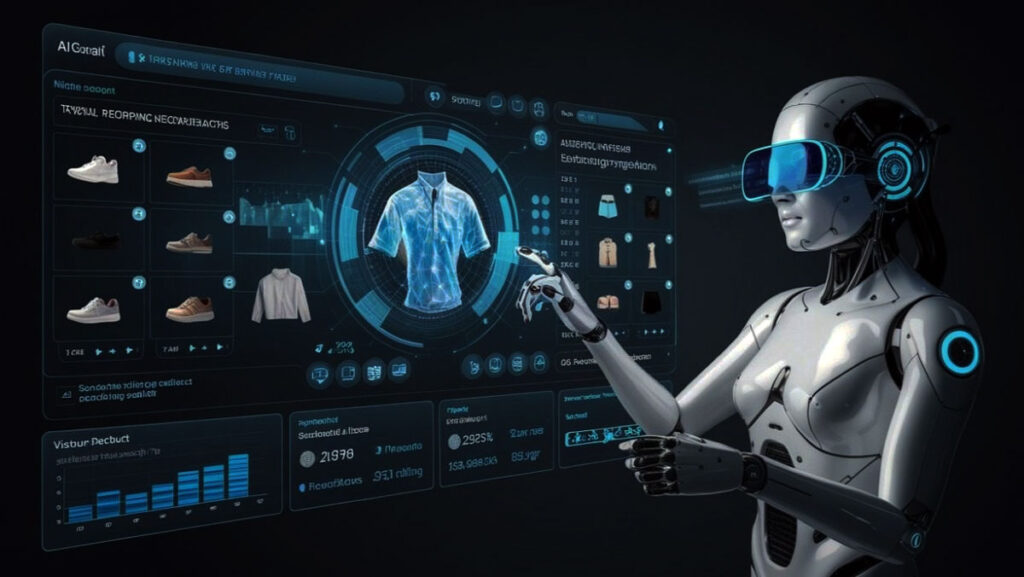
By 2026, experts are increasingly talking about the transition to an adaptive digital environment. In the coming years, recommendations may go beyond content and begin to govern the entire structure of digital interfaces. For example, systems are already being tested where:
- the app interface changes to the user’s behaviour
- the order of functions is dynamically reorganized
- the visual style adapts to emotional responses
- interaction scenarios are adjusted to habits
In the long term, this could lead to the emergence of completely personalised digital spaces. Imagine a social network where each user literally has their own version of the interface, interaction logic, and even social dynamics. This creates a new ethical zone. If algorithms know the user better than they know themselves, the question arises: where does personalisation end and behaviour management begin?
Summary
Recommendation algorithms are no longer just a technology. They have become the infrastructure of digital culture. They determine which content goes viral, which ideas spread faster, which products sell, and which disappear from view. And while the internet was once a space of choice, today it is increasingly becoming a space of prediction. Users still make their own decisions—but increasingly within a digital environment pre-formed by algorithms.